
Contents:
And for https://day-trading.info/out traders to profit —reversal traders must lose. For an uptrend to continue, it has to consistently break new highs. There where the difference between the number of buyers and sellers get more remarkable, it tends to form a Support or Resistance level. Your next logical quest will be to identify them on a price chart. But because that rarely happens it’s important to think of support and resistance as zones on the chart where people buy and sell.

During a bull market, we see a series of higher highs and correction lows and in a bear market, lower downswings and correction highs . An easy-to-use tool to determine possible support and resistance levels. Input a starting value to be the starting point of the square. Then the increasing value will be used to get the value of each cell on the table. It’s possible to show the diagonals and a spot number to see what cell value the current price is close to. The Break and Retest indicator strives to provide a visual aid for spotting areas of continuation and pullbacks.
You also learned how to find potential support and resistance levels close to which you should execute your trades. In a downtrend, the moving average line usually acts as a resistance and prices bounce off it and fall back down, as we can see in the chart above. In the example below, we can see that prices bounce off the moving average. We normally call this type of support, dynamic support, because the level changes every time the moving average moves. Trading off support and resistance takes lots of practice.
Japanese Candlestick Chart Patterns
In an https://forexanalytics.info/, a trendline is drawn from one particular low, connecting other higher lows and projecting the line into the future. This is the most straightforward way of plotting support and resistance levels. Simply mark visible highs and lows on your chart; the higher highs and lower highs will serve as resistance levels, whereas the lower lows and higher lows will serve as support levels. It is always recommended that these lines are marked on longer timeframes to have reliable support and resistance levels.
Maximize Forex Trading Success with Signals in the USA Market – The Southern Maryland Chronicle
Maximize Forex Trading Success with Signals in the USA Market.
Posted: Wed, 01 Mar 2023 12:50:24 GMT [source]
Opening gap using as a potential target which market usually trades to. You may want to take a closer look at each of these eight characteristics. It is incredibly important that you understand how to draw zones, why you should draw zones on your charts, and understand when these … The demand curve, on the other hand, is the exact opposite. As price increases the number of units desired decreases. This is because traders are less willing to buy in a more expensive market.
Pattern Study of Trends, Support and Resistance
Here’s how that looks when it’s applied to a market such as GBPNZD. Get it wrong and your trading experience will most likely be a frustrating one. Information you provide via this form will be shared with Forest Park FX only as per our Privacy Policy. Simply answer a few questions about your trading preferences and one of Forest Park FX’s expert brokerage advisers will get in touch to discuss your options. A bullish engulfing candlestick pattern is a long green candle followed by a long red candle, each with bodies more than two-thirds of the candle length. A pin bar is where the candlestick’s body is contained within the top or bottom third of the entire length of the candle.
- When you’re plotting a strategy after a price reversal, this behavior can be useful.
- Only cover price points that are in a line – this zone is your support and resistance.
- Input a starting value to be the starting point of the square.
Step 1 — On the https://forexhistory.info/, choose either daily, weekly, monthly, or any other time frame according to your trading needs. The idea behind these two lines may seem simple at first. However, you might find that after reading up more, the concept is slightly more difficult to grasp as these levels can come in many different forms. Below is a basic example of a trade plan with a planned limited risk , for a hoped for return.
Drawing Horizontal Lines
One way to help you find these zones is to plot support and resistance on a line chart rather than a candlestick chart. To help you filter out these false breakouts, you should think of support and resistance more as “zones” rather than concrete numbers. One thing to remember is that support and resistance levels are not exact numbers. The complete Cheat Sheet can be used to give an indication of market timing. TheTrader’s Cheat Sheetis a list of 44 commonly used technical indicators with the price projection for the next trading day that will cause each of the signals to be triggered.
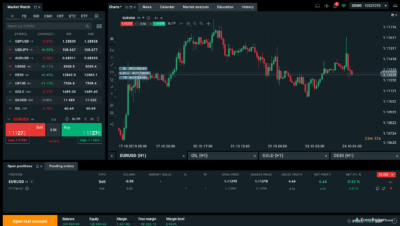
Resistance is the opposite of support and represents a price level over the market where selling pressure overcomes buying pressure. The resistance level is usually identified by a previous peak. As prices move higher, there will come a point when selling will overwhelm the desire to buy.
Sideways Trends
In this case, this trendline is called a resistance line. A trendline can also be drawn through the lows of the price chart and limit the price action on the downside. Support and resistance lines can be drawn in both uptrends and downtrends. You need at least 2 highs or 2 lows to draw a trendline through them. For example, the Fibonacci retracement is a favorite tool among many short-term traders because it clearly identifies levels of potential support/resistance. When the market is trending to the upside, resistance levels are formed as the price action slows and starts to move back toward the trendline.
Learn about crypto in a fun and easy-to-understand format. The Last Price shown is the last trade price at the time the quote page was displayed, and will not update every 10 seconds . The Last Price will update only when the page is refreshed.
A trading pattern is ‘confirmed’ once the support or resistance levels are broken. Rather than using a break of a support or resistance level as an opportunity to establish a new position, you can also use it to minimise loss. The signal to do so comes from the breach of the support or resistance level. Percent retracement is strategic for Technical Analysts as based on this they determine the price levels at which prices will reverse and continue upward afterward.

On the other hand, there are traders who want to get the best possible price, so they place orders at the low of Support. And if enough traders do it, the market will reverse near the lows of Support. This happens when the market breaks your SR level and you assume it’s broken. The market reverses at Support because there is buying pressure to push the price higher. The buying pressure could be from Institutions, banks, or smart money that trades in large orders.
That’s because more trading activity or volume is needed to create a higher timeframe S/R level, indicating more sentiment behind that level. For example, if I am taking a long trade on a 4-hour chart, I don’t want to be trading into a nearby resistance on the weekly chart. When the price returns to the support level, it briefly goes through it but then goes back up, creating a small false breakout.
I trade the major Forex pairs, some Futures contracts, and I rely entirely on Technical Analysis to place my trades. I began trading the markets in the early 1990s, at the age of sixteen. I had a few hundred British pounds saved up , with which I was able to open a small account with some help from my Dad. I started my trading journey by buying UK equities that I had read about in the business sections of newspapers. The 1990s were a bull market, so naturally, I made money. I was fortunate enough in my early twenties to have a friend that recommended a Technical Analysis course run by a British trader who emphasized raw chart analysis without indicators.
There is a common belief that the price must bounce more than once to create a support or resistance level. But a level can have just one bounce to create an S/R level. Lots of traders use support and resistance to help them plan when to enter and exit positions. Resistance is an area on a market’s chart that it has trouble breaking through to hit new highs. When an asset hits it, sellers take over and send its price back down again.
These ‘tests’ of support and resistance are usually represented by the candlestick shadows piercing the S&R levels. One of the most common mistakes that new traders make is buying too close to a line of resistance or selling too close to a line of support. In this page we provide enough set-ups and real-time examples, to make sure you thoroughly understand this simple yet important dynamic.
- What is more, individual traders often also develop their own style and strategy of how to find them, using a mixture of different tools.
- The minor resistance levels in one move become minor support levels in the next.
- The first thing I want to mention about support and resistance levels is that they aren’t always exact levels.
- “Support and resistance” is one of the most widely used concepts in trading.
We introduce people to the world of trading currencies, both fiat and crypto, through our non-drowsy educational content and tools. We’re also a community of traders that support each other on our daily trading journey. The more often price tests a level of resistance or support without breaking it, the stronger the area of resistance or support is. Looking at the line chart, you want to plot your support and resistance lines around areas where you can see the price forming several peaks or valleys. The reason is that line charts only show you the closing price while candlesticks add extreme highs and lows to the picture.